
From AI capability to buyer value.
How our five-member team approached the commercialisation of SageX AI Wizard as a standalone B2B product.
SageX is an operating AI business with products already in market. This consulting project focused on AI Wizard’s standalone positioning, target buyers, pricing and go-to-market recommendations.
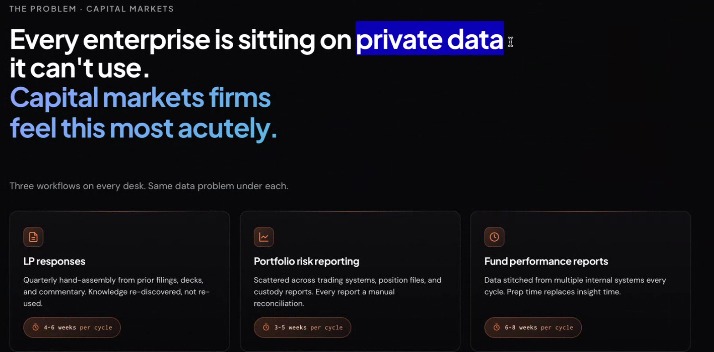
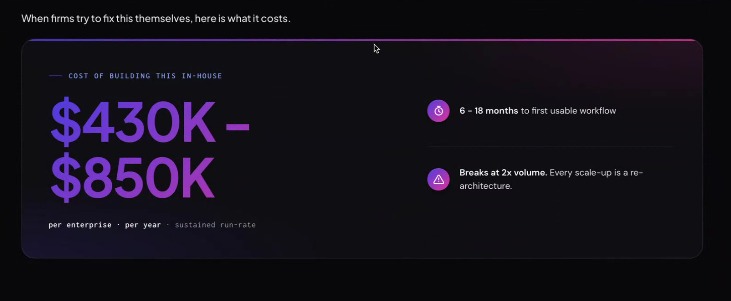
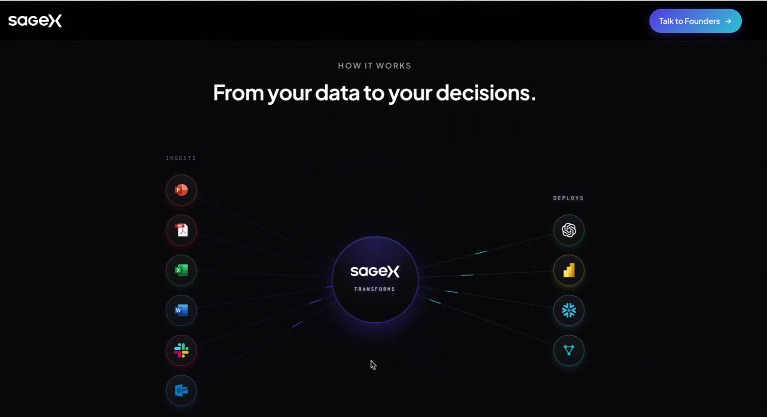
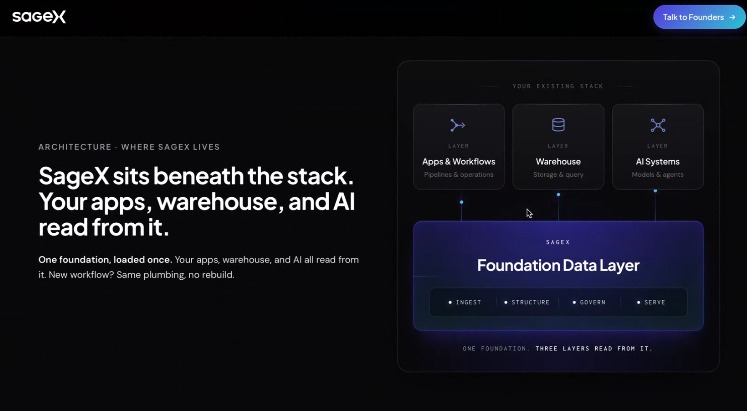
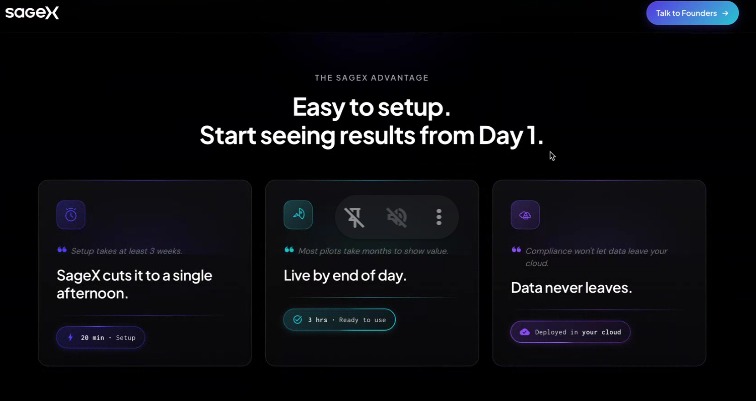
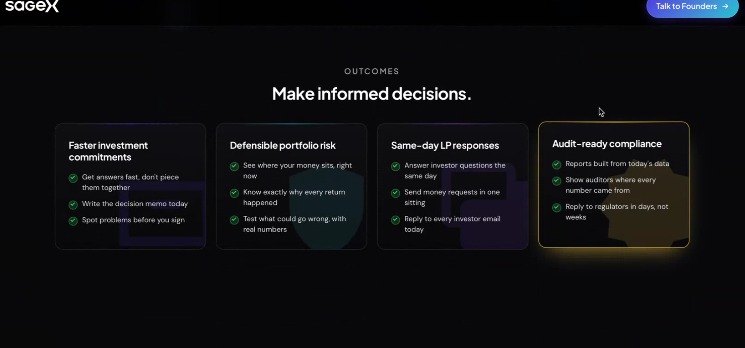
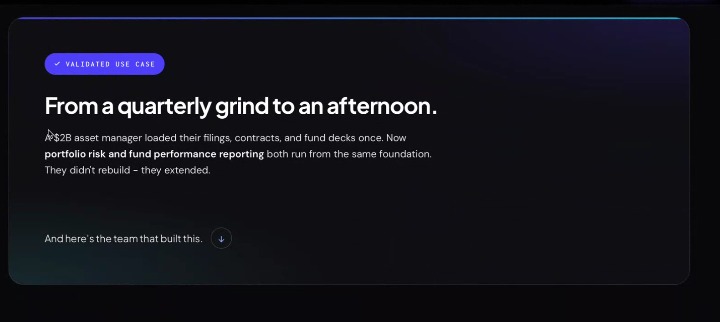
SageX company website screenshots, provided for product context. Company claims are separate from this consulting project's findings.
A capability is only the beginning.
SageX AI Wizard was positioned as a configuration layer for turning unstructured documents into structured, AI-ready data workflows. The consulting brief was to test how this capability could be understood, valued, priced and sold as a standalone B2B product.
Build the proposition around evidence.
Our five-member team combined secondary research with STP and minimum viable segment analysis, primary buyer research, competitor benchmarking, SWOT analysis, pricing hypotheses and sales-material development.
Time lost becomes decisions delayed.
The research brought together feedback from 15 senior decision-makers in financial services and in-depth insights from 7 senior decision-makers in the sector. These perspectives informed the assessment of document-processing challenges and buyer priorities.
Needed 1–3 days to turn raw documents into usable outputs.
Identified slow decision-making as a major operational consequence.
Source: project research.
Time to usable data
Business impact of data delays
Start where the friction is highest.
Five financial-services segments were evaluated. The recommendation prioritised mid-sized financial-services firms with document-heavy workflows and lean internal engineering capacity, with relevant users across operations, compliance, onboarding and reporting.
Translate time into a value hypothesis.
We co-developed a value-based ROI model that translated workflow and labour-time assumptions into estimated annualised operational savings of up to US$342K under the project scenario. This model informed pricing logic and commercial messaging; it was not realised client savings.
Modelled annualised savings · Project scenario · Not realised savings
Preferred pricing model
An AI-ready data foundation.
The recommended positioning moved from feature-led automation messaging toward an AI-ready data foundation proposition. Initial use cases included KYC onboarding, fund reporting, contract review and CRM/ERP integration.
Give buyers a practical next step.
The project produced a buyer-facing sales narrative and a proposed four-week pilot-to-conversion pathway. The pilot was a recommendation, not an executed customer engagement.
PROPOSED FOUR-WEEK PILOT
- 01 Baseline audit
- 02 Shadow processing
- 03 User onboarding & change management
- 04 Business-value review
Commercial clarity is part of the product.
Commercialising an AI product requires more than describing technical capability. Segmentation, buyer evidence, value quantification and a clear implementation pathway all shape whether a product can be understood and purchased.